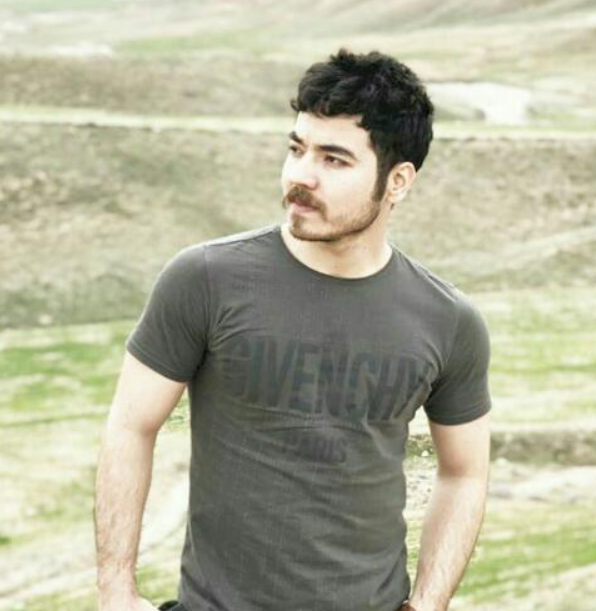
Hello there! I’m Seyed Behzad Hosseini, a computer vision and robotics engineer with a Master’s degree in Artificial Intelligence and Robotics from Sadjad University, and a strong passion for autonomous systems. Over the years, I’ve worked on projects ranging from LiDAR-to-camera calibration and SLAM-based navigation to deep learning for medical image analysis.
Currently, I’m a Robotics and Computer Vision Developer Researcher at Software Motion, where I lead the SLAM group and develop cutting-edge AGV systems, high-precision sensor fusion pipelines, and HD mapping solutions. My expertise spans ROS, computer vision, environment perception, and sensor calibration for autonomous vehicles.
Previously, I’ve tackled diverse challenges such as retinal vessel segmentation, handwriting recognition in medical prescriptions, and edge detection using attention and ensemble techniques. Whether it’s tuning deep learning models, fusing GPS/IMU/visual odometry, or generating maps from point clouds, I enjoy solving complex problems that bring robots closer to understanding and navigating the world.
Beyond work, I’m an avid learner who loves exploring new technologies, reading about AI advancements, and experimenting in the kitchen. I believe the future of robotics lies in the perfect harmony between perception, localization, and intelligent decision-making—and I’m excited to be part of building it.
Location
Languages
I lead the SLAM Group, developing advanced AGV systems using laser-guided navigation and point cloud analysis for precise localization and dynamic navigation in industrial environments. My work involves fusing GPS, IMU, and visual odometry data using Extended Kalman Filters, applying ORB-SLAM3 for mobile robots in unknown environments, creating and testing sensor fusion modules (EM, OM, RM) with SIL validation, calibrating multiple sensor types, and generating OpenDrive HD maps from point clouds.
I developed lightweight edge detection methods based on attention and ensemble techniques, and implemented retinal vessel detection and segmentation pipelines. My experience spans MobileNets, ShuffleNets, ResNet, ResNetXT, CBAM, DeformConv, and GatedConv. I have worked on multi-object tracking, people counting using YOLOv8, and designing algorithms for filtering, segmentation, classification, clustering, and tracking.
I created and deployed OCR systems for handwriting recognition in medical prescriptions using RCNN, built a custom handwriting dataset with Label-Studio, and implemented date detection (YOLOv5) and recognition (pytesseract). My work also included applying attention mechanisms and ensemble techniques to improve model accuracy, and working extensively with object detection, image classification, and neural network architectures.
I conducted research on attention mechanisms for medical image analysis, reviewed and analyzed PET-CT images and related literature, and developed deep learning segmentation models tailored for medical imaging applications.
2017 - 2020
Master’s thesis grade: 19.5/20, ranked first in class
2013 - 2017
Thesis grade: 19/20
Pattern Analysis and Applications journal, 2025 (under review)
We present a modular marker fusion pipeline that combines Gradient and sepctral features of images to achieve high accuracy in image segmentation.
Developed a full-stack e-commerce platform with user authentication, product management, and payment integration using modern web technologies. The platform features a responsive design, secure payment processing, and comprehensive admin dashboard for inventory management.
Created an interactive dashboard for visualizing machine learning model performance and data analytics with real-time updates. Features include model comparison tools, performance metrics visualization, and automated report generation for stakeholders.
Built a cross-platform mobile application for task management with offline capabilities and cloud synchronization. The app includes push notifications, real-time collaboration features, and advanced task categorization with priority management.
Designed and implemented RESTful APIs for a microservices architecture with authentication, rate limiting, and comprehensive documentation. Includes automated testing, monitoring, and scalable deployment strategies for high-traffic applications.
Developed a web-based tool for creating interactive charts and graphs with drag-and-drop functionality and export capabilities. Features include real-time data updates, customizable themes, and integration with various data sources and APIs.
Set up and managed cloud infrastructure using Infrastructure as Code principles with automated deployment and monitoring. Implemented CI/CD pipelines, auto-scaling configurations, and disaster recovery solutions for enterprise-level applications.